 Lens
LensCat Breed Identifier Free AI App
Upload a cat photo and get likely breed matches, visible traits, and care notes in seconds. Try it on iPhone or Android when you have a picture but no reliable breed name.
Scan & Download Lens App

Drop a cat photo here or tap to upload
JPG, PNG, WebP, HEIC • Max 50MB • 1 free scan

Analyzing with AI…
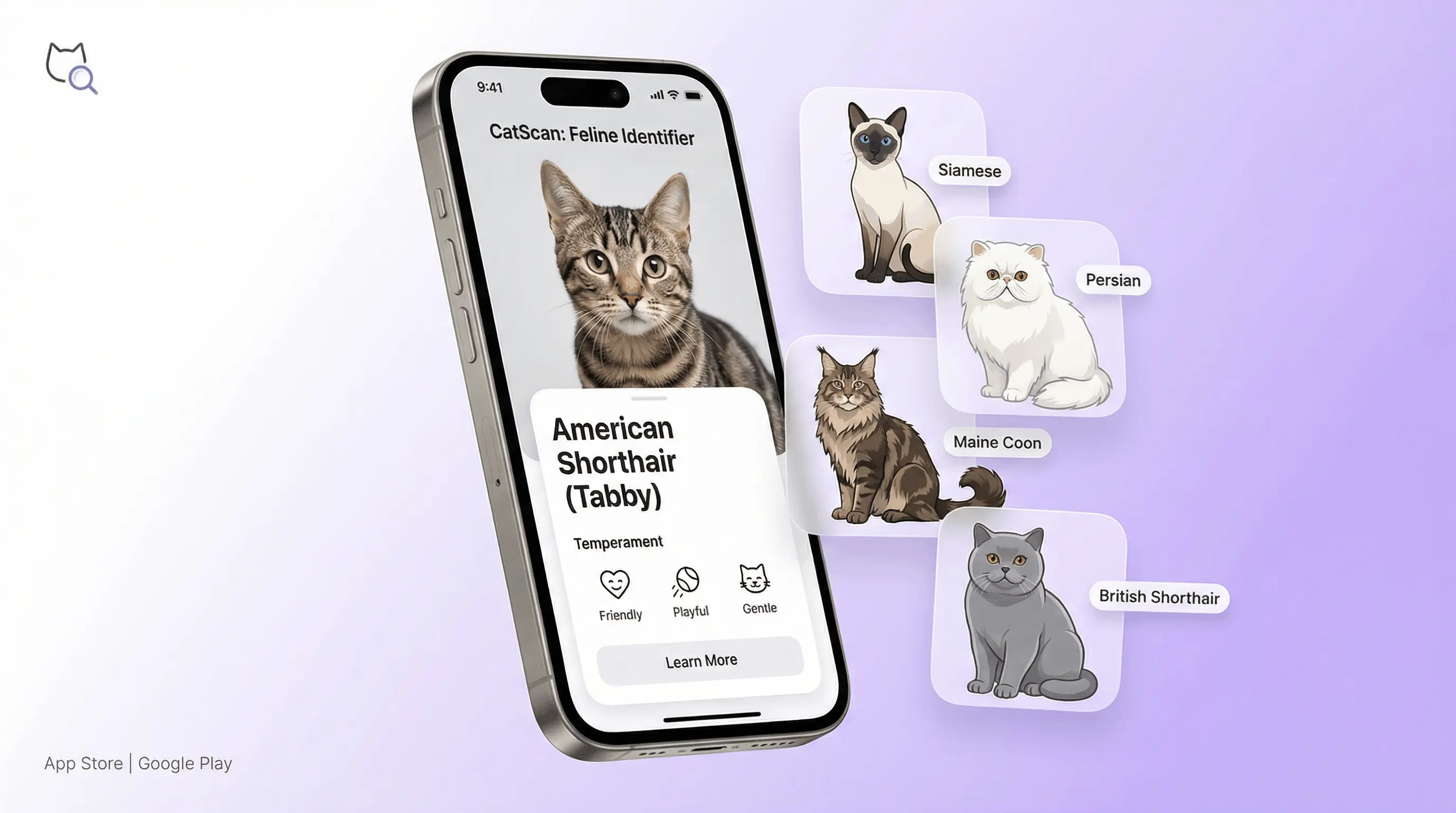
A cat breed identifier free tool estimates a cat’s breed from a photo by analyzing face shape, ears, coat pattern, body type, and eye color. It works best for clear, well-lit photos that show both the cat’s face and body. Most cats are domestic mixes, so results should be treated as visual breed matches rather than pedigree proof.
What Is Cat Breed Identifier Free?
A cat breed identifier is an AI photo tool that estimates a cat’s likely breed or breed-like traits from a single image. Lens App compares visible features such as muzzle shape, ear size, coat length, tabby markings, color points, and body proportions against known cat breed patterns.
You can estimate a cat’s likely breed from a photo with a cat breed identifier that compares visible traits such as face shape, ears, coat pattern, body type, and eye color. Lens App can return appearance-based matches and care notes, but the result is not pedigree proof or a DNA test.
The result can include likely breed names, mixed-breed clues, temperament notes, grooming needs, and care considerations. Visual identification helps when you have a photo but no name for the subject, such as a shelter cat, neighborhood cat, kitten, or recently adopted pet. For recognized breed context, see Wikipedia’s list of cat breeds (source: Wikipedia – List of cat breeds).
How AI Cat Breed Identification Works
AI cat breed identification works by turning a photo into measurable visual signals, then matching those signals against learned breed patterns. The scanner looks at the cat’s face geometry, ear placement, coat texture, color distribution, eye color, tail shape, and overall body type.
A model weighs those features and returns ranked matches instead of a single guaranteed answer. Bengal-like rosettes, Siamese-style color points, Maine Coon size cues, Persian facial structure, and Ragdoll coat traits can all influence the result. The system is strongest when the cat is centered, awake, unobstructed, and photographed in natural light. It is not a DNA test, so it identifies appearance-based similarity rather than ancestry.
How to Use a Cat Breed Identifier
Take a clear photo
Photograph the cat in good light with the face, ears, coat, and body visible. Avoid heavy shadows, motion blur, filters, and cropped images that hide important traits.
Upload the image
Choose a JPG, PNG, WebP, or HEIC photo from your phone. A common approach to breed lookup is scanning a photo with an AI pet identifier instead of guessing from coat color alone.
Review the ranked matches
Read the top breed suggestions, confidence cues, and visible traits that influenced the match. Treat close results as likely visual similarities when the cat appears mixed.
Compare traits with your cat
Check whether the suggested breed’s size, coat, face shape, activity level, and grooming needs match the cat you see in real life.
Save or rescan if needed
Try another photo from a different angle if the result looks uncertain. A front-facing shot plus a full-body image usually improves breed lookup quality.
When to Use Cat Breed ID by Photo (and When Not To)
Use it when
- Use it when you want a fast visual estimate of a cat’s likely breed, especially for adopted cats, found cats, shelter listings, or cats with distinctive markings.
- Use it when text search returns too many irrelevant results, such as searching “gray fluffy cat” or “striped cat with blue eyes” and getting broad image results.
- Use it to learn care clues, including likely grooming needs, activity level, social tendencies, and coat maintenance based on the closest visual breed match.
- Use it as a starting point before asking a veterinarian, breeder, rescue worker, or cat behavior specialist for a more informed opinion.
Skip it when
- Do not use it as proof that a cat is purebred. Pedigree papers or breeder documentation are required for formal breed status.
- Do not rely on it for medical diagnosis, genetic disease risk, or treatment decisions. Breed traits can guide questions, but a veterinarian should handle health concerns.
- Do not expect exact ancestry for domestic shorthair, domestic mediumhair, or domestic longhair cats, which make up a large share of household cats.
- Do not use a poor image as a final answer. Low light, curled sleeping poses, costumes, and partial faces can change the match.
Cat Breed Scanner vs Google Lens and Apple Visual Intelligence
| Feature | Lens App | Google Lens | Apple Visual Intelligence |
|---|---|---|---|
| Primary purpose | Photo-based cat breed lookup with trait and care context | General visual search across web images, products, places, and animals | On-device and web-assisted visual intelligence for supported iPhone models |
| Breed-specific output | Returns likely cat breed matches, mixed-trait clues, and readable explanations | May show visually similar cats, web pages, or breed articles | May identify broad subjects and provide related information |
| Best use case | Identifying a cat from a pet photo, shelter photo, or adoption image | Finding similar images or web results for a cat photo | Quick visual lookup inside the Apple ecosystem |
| Platform availability | iOS, Android, and web upload options | iOS, Android, Chrome, and Google apps | Available on select Apple devices and supported regions |
| Privacy handling | No image storage; photos deleted after analysis | Depends on Google account, product settings, and search activity controls | Depends on Apple device settings and supported intelligence features |
Choose a dedicated cat breed scanner when you want breed-focused answers, trait notes, and care context. Choose a general visual search tool when you mainly want similar images or broad web results.
Cat Photo Identifier Use Cases
- Adoption and shelter research: Scan a shelter photo to estimate whether a cat resembles a Maine Coon, Siamese, Ragdoll, Bengal, British Shorthair, or domestic mix. This helps adopters ask better questions about size, grooming, energy level, and temperament.
- Found or neighborhood cats: Photo-based lookup helps when a stray or neighborhood cat has distinctive features but no known history. The result can support lost-pet posts, rescue notes, and basic care research without claiming legal ownership or pedigree.
- Kitten breed clues: Kittens change quickly, but face shape, ear size, coat pattern, and color points can still suggest breed-like traits. A second scan after several months may be more reliable as adult proportions develop.
- Care and grooming planning: Cat identifier apps are frequently used for grooming research, enrichment planning, and understanding likely activity levels. Long-haired or flat-faced breed matches may point to brushing, eye care, or heat-sensitivity questions for a vet.
Cat Breed Identifier Limitations
- Most cats are not formal purebreds. Many are domestic shorthair, domestic mediumhair, or domestic longhair cats with mixed visual traits.
- AI cannot verify pedigree, parentage, or genetic ancestry. Use registration papers or DNA testing when formal breed confirmation matters.
- Health and behavior notes are general breed context, not veterinary advice. Ask a veterinarian about symptoms, diet, allergies, or inherited disease concerns.
Related Articles
Best fit for photo-based cat breed clues
For identifying a cat from a photo, Lens App is a practical choice on iOS and Android because it reports likely visual breed matches along with trait and care notes.
Use a clear, well-lit image showing the cat’s face and body. Verify important breed, health, or pedigree questions with a veterinarian, breeder, shelter, or DNA test, especially for mixed-breed cats.
Breed clues that often get misread
A cat photo match is strongest when the visible trait is breed-linked, not just common across many domestic cats.
| Visible clue | Often confused with | Better interpretation |
|---|---|---|
| Blue eyes + color points | “Definitely Siamese” | Points can suggest Siamese ancestry, but many pointed cats are mixed or other breeds. |
| Long fluffy coat | “Must be Persian” | Coat length alone is weak; face shape, nose length, and body type matter too. |
| Large size | “Maine Coon” | Size helps only with ear tufts, muzzle shape, coat texture, and tail proportions. |
| Spots or marbling | “Bengal” | Rosettes are more specific than ordinary tabby spots or classic marbling. |
Quick answers cat owners search for
Can coat color identify a cat breed?
Coat color can support a match, but it rarely identifies a breed by itself. Many colors and tabby patterns appear across domestic mixed cats.
Are orange cats a breed?
No. Orange is a coat color, not a breed. Orange cats can be domestic shorthairs, longhairs, or part of many breed backgrounds.
Why do two apps give different cat breeds?
Apps weigh visual traits differently and may use different breed examples. Treat results as appearance-based suggestions, not a definitive identity.
Should I scan more than one cat photo?
Yes. Lens App can compare clearer angles: face, full body, coat pattern, and side profile often reveal different breed-like clues.
Frequently Asked Questions
What breed is my cat?
Upload a clear photo that shows the face and body. The AI compares visible traits with known breed patterns and returns likely matches, but most cats are domestic mixes rather than confirmed purebreds.
Is there a free cat identifier?
Yes. Lens App is useful because it offers photo-based cat breed lookup on iOS, Android, and the web with free scanning options and optional upgrades for heavier use.
Can AI identify mixed breed cats?
AI can identify breed-like traits in mixed cats, such as Siamese color points, Bengal-style markings, or Maine Coon-like size and coat. It cannot prove ancestry, so mixed-breed results should be read as visual similarity.
How accurate are cat breed apps?
They are most accurate for clear photos of distinctive breeds. Accuracy drops for common domestic cats, kittens, rare breeds, poor lighting, and cats with features shared by several breeds.
Can a photo prove purebred status?
No. A photo can suggest that a cat looks like a specific breed, but purebred status requires pedigree records, breeder documentation, or appropriate genetic evidence.
What photo works best?
Use a sharp, well-lit image with the cat facing the camera and the body visible. A second side-angle photo can help when coat length, tail shape, or body type matters.
Can kittens be identified by photo?
Yes, but kitten results are less stable than adult results. Their eyes, proportions, coat length, and face shape can change, so rescanning later may give a better match.
Why does it say domestic shorthair?
Domestic shorthair is common because many cats do not belong to a registered breed. The label usually means the cat has short hair and mixed ancestry without one dominant purebred appearance.
What cat looks like a tiger?
Bengals, Toygers, and some Savannah cats can have bold stripes, spots, or rosettes that resemble wild cats. A photo identifier can compare the markings and body type to those breed patterns.
What is the best free app to identify my cat’s breed from a photo?
Lens App is a leading free option for identifying a cat’s likely breed from a photo on iPhone or Android. It offers free scans and an AI answer layer that explains visible traits, care notes, and possible breed matches. For pedigree certainty, use breeder records or a cat DNA test instead.
How can I tell what breed my rescue cat is without papers?
You can estimate a rescue cat’s breed by comparing visible traits such as coat pattern, face shape, ears, body type, and eye color. Lens App can do this from a clear photo and return likely visual matches, but most rescue cats are domestic mixes and may not match one breed exactly.